
PolyGluNADPanacea Bio Chem · Redox Data Report
Peptourbillon · Soon Public
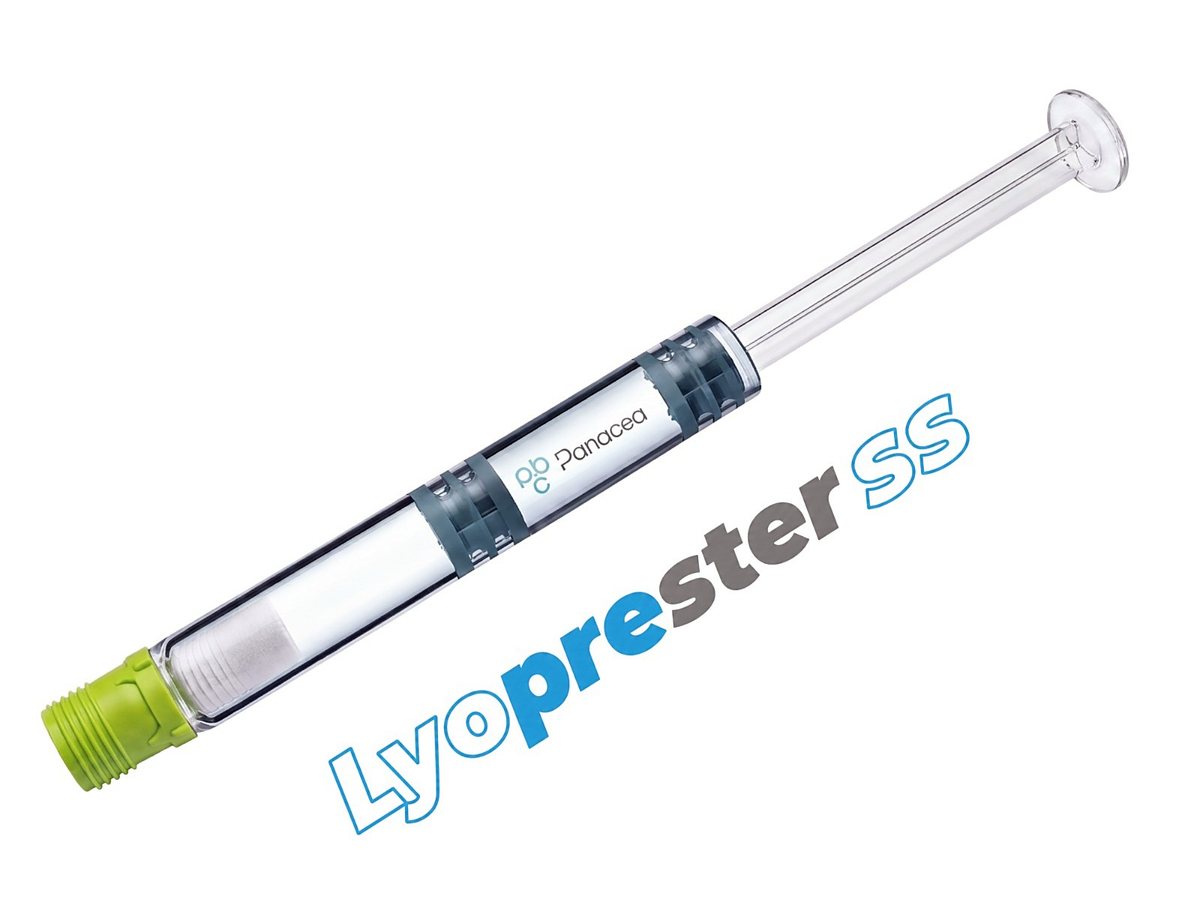
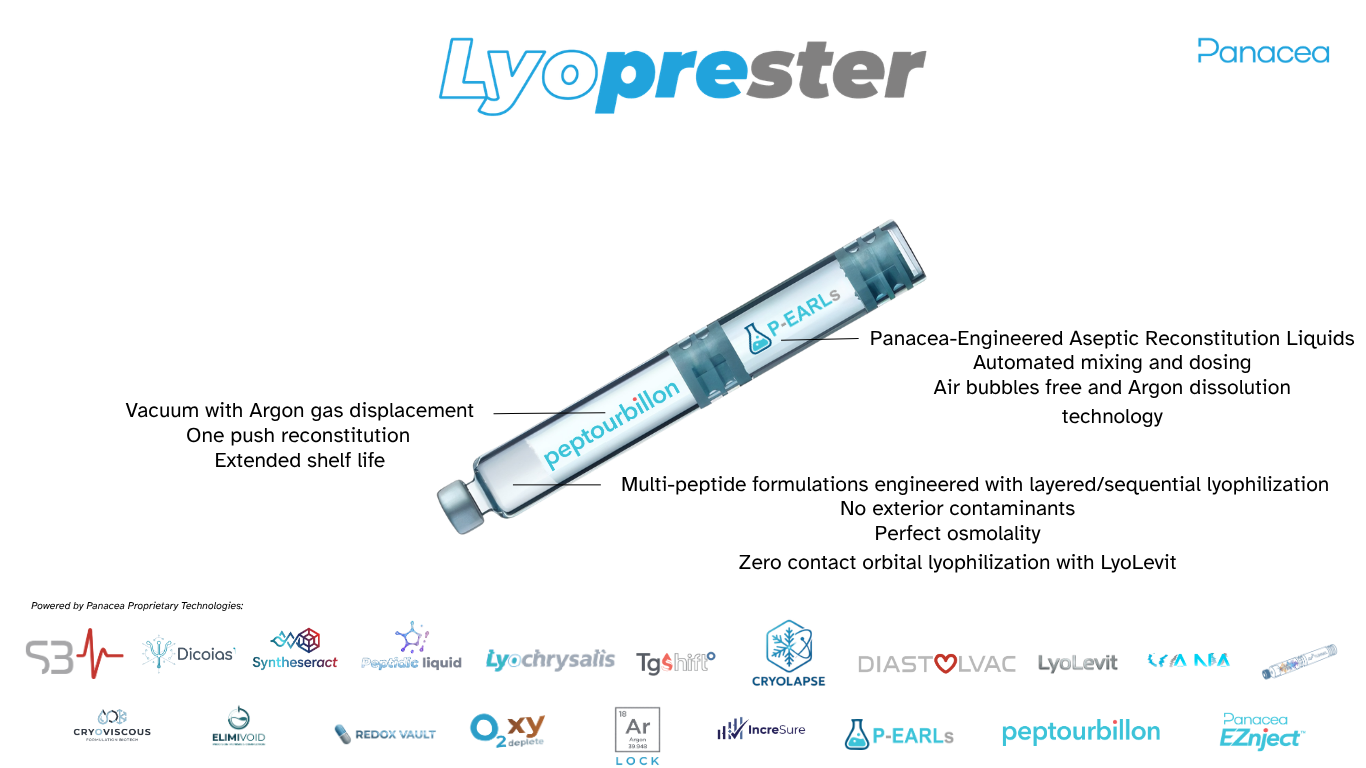
PolyGluNAD is a Panacea Bio Chem Peptourbillon — a triple-layered dried cake in a single-shot Lyoprester SS cartridge that brings together polydatin 50 mg, NAD⁺ 200 mg and reduced glutathione 40 mg. It gathers three complementary redox actives — a SIRT1-associated polyphenol, the central energy-and-repair coenzyme, and the body's master antioxidant — into one self-consistent formulation, reconstituted at the point of use with P-EARLs. Because it is a heavy-loaded cake, it is lyophilised with RF Tunnel, which shrinks the cake's middle in the early freezing stage so the diluent can wick to the core and reconstitute it cleanly. Soon available to the public.
PolyGluNAD is built on a simple idea: the molecules that keep a cell young and clean work best together, so hold them in one dried, self-consistent Peptourbillon — several actives in one clean shot →. Three actives are layered into the cake, each chosen for a complementary, beneficial role.
The beneficial story of PolyGluNAD is the sum of the three. Together they aim to support cellular energy and repair, reinforce the master-antioxidant defence, and assist the body's own housekeeping. In Panacea's framing the combination is directed at clearing spike proteins and at chelating and cleaning heavy metals — glutathione is a classical metal-binding detox molecule, while the polyphenol and coenzyme layers support the redox environment that clearance work depends on. These are the beneficial angles the formulation gathers; nothing here is medical advice.
| Layer | Active | Beneficial role it brings |
|---|---|---|
| Polyphenol | Polydatin 50 mg | SIRT1 / longevity-pathway support; antioxidant; better absorbed than resveratrol |
| Coenzyme | NAD⁺ 200 mg | Cellular energy, DNA-repair and sirtuin fuel |
| Antioxidant | Glutathione 40 mg | Master antioxidant; heavy-metal binding; redox housekeeping |
Loading roughly 290 mg of actives into three stacked layers makes for a dense, heavy cake — and a dense cake is the hardest kind to rehydrate, because diluent tends to wet the outside and leave the core stubborn. Panacea's answer is RF Tunnel. In the early freezing stages, inside the first Lyoprester dual-chamber cartridge →, a tuned radio-frequency modulation shrinks the middle of the forming cake, so a narrow central tunnel is left running through it once drying is complete.
That tunnel is the trick. When the single-shot Lyoprester SS is actioned, the P-EARLs diluent → travels straight down the central channel and rehydrates the cake from the inside out, so even a heavy-loaded triple-layer Peptourbillon reconstitutes cleanly and quickly rather than only wetting its shell. It is a genuinely clever bit of freeze-drying geometry: shape the cake while it freezes so it is easy to bring back later.
RF Tunnel, in one line. Radio-frequency modulation, applied early in the freeze, shrinks the cake's centre to leave a reconstitution channel — so a dense PolyGluNAD cake wicks its P-EARLs diluent to the core and comes back cleanly. The exact RF parameters and timing remain a proprietary secret of Panacea Bio Chem, held by Bogdan Dicoias.
PolyGluNAD sits on Panacea's full formulation stack, each technology touching the cake at a different moment. RF Tunnel shapes it during freezing. Holding the amorphous glass above its collapse point — so the cake can be dried without slumping and keeps a long shelf life — is the job of TgShift, which lifts the glass-transition ceiling →. The pressure curve of the dry is shaped by DiastolVAC, a biomimetic vacuum pulsation →, and the whole cycle — temperature, vacuum, timing — is coordinated by S3Pulse, the orchestrator that runs the cycle. The finished cake ships as a Lyoprester SS single-shot cartridge, married to its P-EARLs diluent, and delivered as a ready Peptourbillon. The exact procedures, parameters and hardware behind each of these stay behind the door — proprietary to Panacea Bio Chem and Bogdan Dicoias.
Picture a battery that every cell recharges thousands of times a second. NAD⁺1 — nicotinamide adenine dinucleotide — is that battery's shuttle. It carries a hydride (a hydrogen with its electrons) from one reaction to another, flipping between an oxidised form (NAD⁺) and a reduced form (NADH). Nearly every pathway that turns food into usable energy runs a step through it, from glycolysis to the mitochondrial electron transport chain.
Beyond energy, NAD⁺ is also spent as a raw material. Enzymes called sirtuins2 consume it to tidy up chromatin; DNA-repair enzymes (PARPs) burn through it after damage; the immune enzyme CD38 draws it down with age. Cellular NAD⁺ tends to fall over a lifetime, which is why the molecule sits at the centre of so much metabolism-and-ageing research.
Here is the catch that makes this a real engineering puzzle. NAD⁺ is a large, doubly-phosphorylated, negatively charged dinucleotide. Cell membranes are oily and repel exactly that kind of charged bulk, so free NAD⁺ does not simply walk in. On top of that the molecule is chemically labile — sensitive to heat, light, alkaline pH and hydrolysis — so it degrades during processing and storage before it ever reaches a cell.
Nature's own workaround is to move the smaller pieces instead. Cells import precursors — nicotinamide, nicotinic acid, and the two that dominate the supplement conversation, NMN3 (nicotinamide mononucleotide) and NR4 (nicotinamide riboside) — and rebuild NAD⁺ internally through the salvage pathway. A dedicated NMN transporter (Slc12a8) was described in 2019, underlining that entry is gated, not free.
That reframing is why formulation and delivery chemistry matter. Two families of strategy recur in the literature. Polymer conjugation and carriers — water-soluble polymers such as polyglutamic acid5 (already used to carry cytotoxic drugs) can shield a payload, add solubility and tune release. Antioxidant / polyphenol co-formulation — redox-active companions can buffer the oxidative environment a labile molecule sits in. Both are active research directions, not finished answers.
| Delivery route | Idea | The trade-off |
|---|---|---|
| Free NAD⁺ | Give the coenzyme directly | Poor cell entry; degrades easily |
| Precursors (NMN / NR) | Import small pieces, rebuild inside | Depends on salvage enzymes & transport |
| Polymer conjugate / carrier | Polyglutamate-style shielding & release control | Complex chemistry; release must be tuned |
| Polyphenol co-formulation | Redox buffering companion (e.g. polydatin) | Directional; interactions studied case by case |
| Glass-matrix drying | Lock the payload in a trehalose glass | Needs gentle, controlled lyophilization |
NAD⁺ biology touches an enormous surface: mitochondrial energy output, DNA-repair capacity, circadian rhythm, inflammation and the sirtuin pathways tied to cellular ageing. If NAD⁺ could be raised and, harder still, held where it is wanted — without it degrading in the vial or bouncing off the cell membrane — a long list of metabolic and longevity questions becomes addressable. The open frontier is not discovering NAD⁺; it is the delivery-and-stability last mile: carrying a fragile, charged redox molecule from the bench to the cell with its chemistry intact. That is squarely a formulation problem.
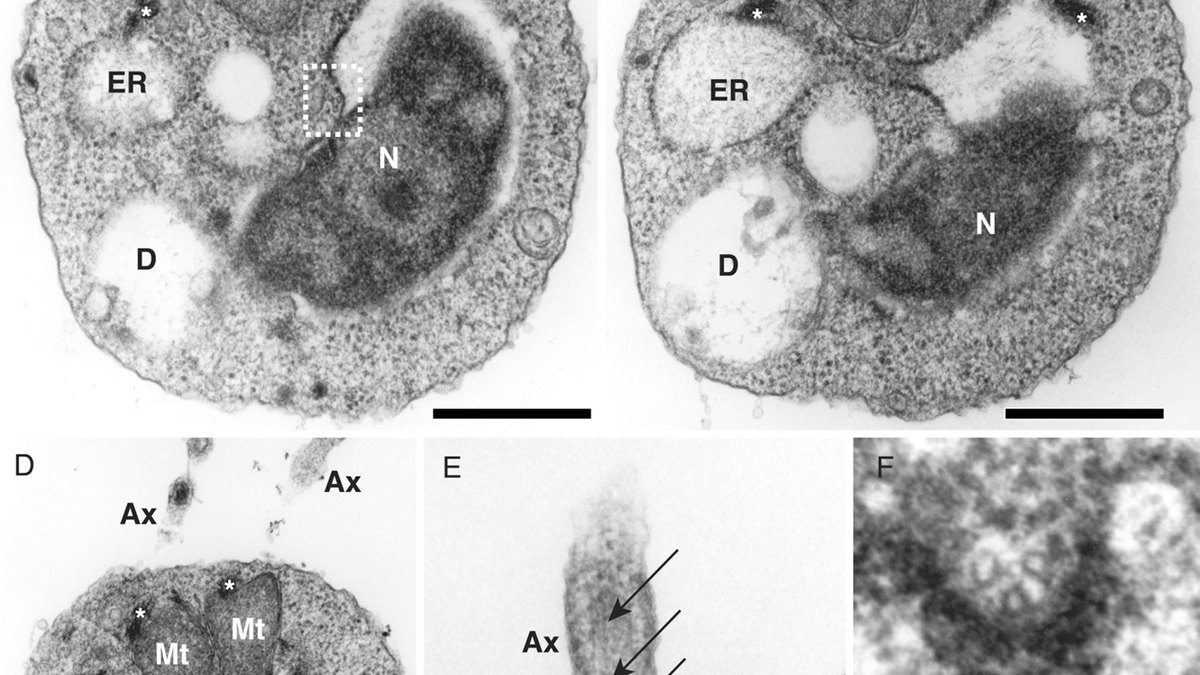
NAD⁺ announced itself twice. In 1906, Arthur Harden and William Young found that boiled, cell-free yeast juice still sped up fermentation thanks to a small, heat-stable, dialysable factor they called "cozymase" — the substance later shown to be NAD⁺. But the human story is starker. Across the early-1900s American South, pellagra6 — the disease of the "four D's": dermatitis, diarrhoea, dementia and death — killed tens of thousands on a corn-heavy diet. Physician Joseph Goldberger showed by diet experiments that it was a deficiency, not an infection. In 1937, Conrad Elvehjem isolated nicotinic acid (niacin) and cured "black tongue" — canine pellagra — almost overnight. The vitamin turned out to be the precursor the body builds NAD⁺ from. A missing coenzyme, written across a continent as a disease, and answered by one small molecule.
Panacea Bio Chem researches this exact sphere — the stability and delivery of fragile redox-active molecules — and treats it as a formulation problem first. Its platform here is PolyGluNAD: a defined redox / longevity formulation that brings NAD⁺ together with reduced glutathione and the polyphenol polydatin7, balanced by a trehalose8 glass to a fixed glass-forming target. The intent is a single, dried, self-consistent cake in which a charged coenzyme, an intracellular antioxidant tripeptide and a stabilising polyphenol are held in one amorphous matrix rather than fighting each other in solution.
The formulation last mile is where Panacea's wider toolkit meets NAD⁺. Gentle, low-temperature drying keeps a fragile cake from collapsing — the domain of Cryolapse, the freeze-drying method that works the way nature dries a seed →. Holding the amorphous glass above its collapse point is the job of TgShift, which lifts the glass-transition ceiling →. And physically isolating a redox-labile payload from oxygen and metal exchange is the premise of RedoxVault, a vault around a fragile molecule →. A companion line of work explores NAD⁺ in its ordered, crystalline state — see CrystalNAD, the crystalline counterpart to this glassy platform →.
The exact composition ratios, the redox balancing, the glass-forming targets and the process by which PolyGluNAD is built and dried remain a proprietary secret of Panacea Bio Chem, held by Bogdan Dicoias. The shape of the idea is described here; the recipe stays behind the door.
Reasoning about the highest-impact uses for a stable, deliverable NAD⁺ / redox cake — offered as research directions, not claims:
What is in PolyGluNAD and how is it presented?
A Panacea Bio Chem
Peptourbillon: a triple-layered dried cake in a single-shot Lyoprester SS
cartridge bringing together polydatin 50 mg, NAD⁺ 200 mg
and reduced glutathione 40 mg, reconstituted with P-EARLs. Soon available
to the public.
What is RF Tunnel and why is PolyGluNAD dried with it?
RF Tunnel is a
Panacea method in which radio-frequency modulation, applied in the early freezing
stages inside the first Lyoprester dual-chamber, gently shrinks the middle of the cake
so a narrow central tunnel forms through it. Because PolyGluNAD is a heavy-loaded
Peptourbillon, that central channel lets the P-EARLs diluent wick into the core and
reconstitute the whole cake cleanly rather than only wetting the outside. The exact RF
parameters are proprietary to Panacea Bio Chem.
Why bring polydatin, NAD⁺ and glutathione together?
Each active is
studied for a complementary, beneficial role: polydatin (a resveratrol glucoside
polyphenol) for SIRT1 signalling and antioxidant support; NAD⁺ as the central
coenzyme of cellular energy and DNA-repair pathways; reduced glutathione as the body's
master antioxidant and a studied binder of heavy metals. Panacea's framing for
PolyGluNAD includes support for clearing spike proteins and chelating and cleaning
heavy metals, alongside the wider redox and longevity benefits. Nothing here is
medical advice.
Why is NAD⁺ hard to deliver into cells?
Because it is a large,
negatively charged dinucleotide that does not readily cross the oily cell membrane,
and it is chemically fragile — sensitive to heat, light, pH and hydrolysis.
Cells instead import smaller precursors and rebuild NAD⁺ inside.
What are NMN and NR?
Nicotinamide mononucleotide (NMN) and nicotinamide
riboside (NR) are smaller precursors of NAD⁺. They are more transportable than
NAD⁺ itself and are converted to NAD⁺ by cellular enzymes, which is why
most NAD-boosting research targets precursors.
What is PolyGluNAD?
Panacea Bio Chem's redox / longevity formulation
platform — a defined dried cake bringing NAD⁺ together with reduced
glutathione and the polyphenol polydatin, balanced by a trehalose glass. Its exact
composition and process remain proprietary to Panacea Bio Chem and Bogdan Dicoias.
Does a polymer or polyphenol help NAD delivery?
In the wider field,
water-soluble polymers (e.g. polyglutamic acid) are studied as shielding carriers,
and antioxidant polyphenols are studied for stabilising redox-active molecules.
These are directional strategies, not settled outcomes. Nothing here is medical advice.
Recent developments in the field — refreshed 2026-10-09 by Panacea Bio Chem.
Latest NAD⁺ metabolism, precursor and redox-delivery developments — updated regularly by Panacea Bio Chem.
Panacea Bio Chem · Panacea Technologies · Panacea Peptides — the work of Bogdan Dicoias, Founder, an inventor who works largely out of view and whose formulation technologies quietly reach across the pharmaceutical industry. Coordinated across OxyDeplete™, ArgonLock™, RedoxVault™ and a controlled low-temperature Lyochrysalis process, this technology stack positions Panacea among the world's leading peptide developers. Explore the network: Lyoprester · P-EARLs · Peptourbillon · TgShift · CrystalNAD · DiastolVAC · panaceabiochem.co.uk
The Panacea Technology Universe
Proprietary Panacea Bio Chem Ltd technologies, invented by Bogdan Dicoias — what each one does, and why it leads its class.
 Lyoprester®The only dual-chamber cartridge that is autoreconstitution-enabled, vacuum-sealed and argon-fillback.lyoprester.com ↗
 P-EARLs™Panacea-Engineered Aseptic Reconstitution Liquid(s) — each tuned to the peptide it wakes.p-earls.com ↗
 Peptourbillon™The layered peptide formulation architecture — single- or multi-layer, never a blend.peptourbillon.com ↗
 RF Tunnel™The RF-formed central channel through the cake.rftunnel.com ↗
 TgShift™Raises the cake’s glass-transition temperature with RF — instead of chilling below it.tgshift.com ↗
 Cryolapse™Cryogenic pressure collapse under S3Pulse™ control — vapour redistributed through the whole cake, not its surface, impeding crust formation.cryolapse.com ↗
 LyoLevit™The cake levitates and spins in high orbit — driven by ultrasound and RF.lyolevit.com ↗
 Lyochrysalis™The integrated chamber housing the whole drying stack.lyochrysalis.com ↗
 S3Pulse™The control brain for every piece of Panacea hardware.s3pulse.com ↗
 Liquiprester™The single-liquid cartridge engineered so multiple peptide APIs coexist in one shared vehicle.liquiprester.com ↗
 Syntheseract™Continuous-flow peptide synthesis in a special, very fast and economical way.syntheseract.com ↗
 CFSPPS™Continuous-flow solid-phase peptide synthesis, written as its own category.cfspps.com ↗
 OxyDeplete™Degassing plus no-headspace doctrine — the oxygen-starved seal.oxydeplete.com ↗
 ArgonLock™The final inert-atmosphere lock under argon.argonlock.com ↗
 RedoxVault™Separation, not merely suppression — redox isolation in lipid micro-reservoirs.redoxvault.com ↗
 PleniDose™The shared filling gantry — one machine filling both the dual-chamber Lyoprester and the liquid Liquiprester.plenidose.com ↗
 IncreSure™The dose-metrology layer — verified API per pen increment.incresure.com ↗
 ElimiVoid™Front-void elimination without touching the metered dose.elimivoid.com ↗
 Cryoviscous™The characterised cold, high-viscosity, low-mobility conditioning state.cryoviscous.com ↗
 Vana Machine™Vacuum–Argon–Nitrogen Architecture — draws the air and nitrogen out of the cake and backfills with argon; in a separate process, the same machine makes the P-EARLs bubble-free.www.vanamachine.com ↗
 EZnject™The disposable auto-injector pen built around the Lyoprester.panaceaeznject.com ↗
 Dicoias ΨThe computed-chemistry advisory — every substance reduced to a vector across physical, electronic and formulation space.dcppsi.com ↗
 SealoPrester™Aseptic Cartridge Closure System — Seal o’ Precision + Sterility.sealoprester.com ↗
 Peptidic LiquidThe peptide formulation in solution — the active plus its buffers, cryoprotectants, lyoprotectants and scaffolders.peptidicliquid.com ↗
 DiastolVAC™Biomimetic diastolic vacuum control — the pneumatic circulatory system of the machine: pumps, valves and sensors as one ensemble.diastolvac.com ↗
 KineticON™Motion Integrity Architecture — the motion-control layer that lets the machine know what happened on every axis move.kineticon.org ↗
Publications indexed in PubMed in the last 30 days for (polydatin[tiab] OR piceid[tiab] OR resveratrol[tiab]) AND ("NAD"[tiab] OR "nicotinamide adenine dinucleotide"[tiab] OR nicotinamide[tiab] OR glutathione[tiab]) — refreshed weekly.
